
How Construction Draws Work: A Developer's Guide to Financing a Build in Nova Scotia
Construction financing doesn't hand you the money on day one. Instead, the lender advances funds in stages — draws — as the building actually goes up. Understanding how draws work is the difference between a project that stays funded and one that stalls mid-build.
General information from the Indi Mortgage Commercial Division team — not financial advice.
In short: a construction loan is advanced in stages (draws) as the building is completed and inspected — you're only ever advanced up to what's actually built, and interest accrues only on the funds drawn. Getting the draw schedule and lien holdbacks right is what keeps a project funded to completion.
The basic idea
A construction loan funds the project as it's built, not before. You (or your lender's quantity surveyor) submit a draw request at set milestones; the lender inspects, confirms the work is in place, and advances that portion of the loan. This protects the lender — they're only ever lent up to what's actually been built — and it keeps the project on a disciplined budget.
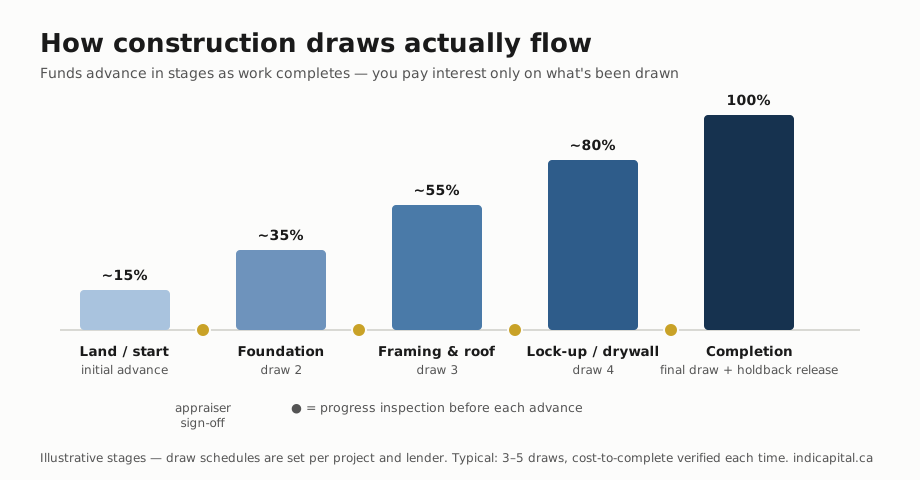
A typical draw sequence
Draws usually track construction stages, for example:
- Land / pre-construction — closing the site, permits, servicing
- Foundation / below-grade
- Framing / structure
- Lock-up (roof, windows, exterior closed in)
- Interior / mechanical, electrical, plumbing
- Completion / occupancy
Each draw is sized to the cost-to-complete at that stage, and each is typically confirmed by an inspection or a quantity surveyor's report before funds release.
Holdbacks and the Nova Scotia Builders' Lien Act
In Nova Scotia, the Builders' Lien Act requires a holdback (commonly around 10%) on construction payments to protect subtrades. That holdback is released after the lien period expires. Your financing has to account for it — a common cash-flow surprise for first-time developers, since you're carrying that 10% until release.
Cost-to-complete: the number that keeps you funded
At every draw, the lender is asking one question: is there still enough loan left to finish the building? This is the cost-to-complete test. If costs run over budget, the lender may require you to inject equity to keep the project "in balance" before advancing more. Building a realistic budget with a contingency up front is the best way to avoid a mid-project cash call.
Interest during construction
You typically pay interest only on the funds drawn so far, often from an interest reserve built into the loan. As more of the building is complete and more is drawn, the carrying cost rises — which is why a tight construction timeline directly protects your returns.
The takeout: your exit plan
A construction loan is temporary by design. Before the first shovel, lenders want to see a credible takeout — the plan to refinance the construction loan into a term mortgage (often CMHC-insured for multi-unit) once the building is complete and leased. → CMHC MLI Select explained
Set your project up right
Good construction financing is really good planning: a realistic budget, a sensible draw schedule, the holdback accounted for, and a takeout lined up from the start. That's the part our commercial team manages for Nova Scotia developers — structuring the construction facility and the takeout together so the project is funded from ground-breaking to stabilization.
- Model the finished-project financing: feasibility calculator
- Structure your build: (902) 298-0218
- Related: Commercial construction financing in Nova Scotia · The complete guide to commercial mortgages in Nova Scotia
Indi Mortgage Commercial Division — construction and development financing across Halifax and Nova Scotia. General information only; the Builders' Lien Act holdback and other requirements are set by law and lender policy. Not financial advice.