
Commercial Mortgage Rates in Nova Scotia: What Actually Drives Your Number
Everyone wants a single number. But commercial mortgage rates don't work like posted residential rates — there's no one "Nova Scotia commercial rate," because your rate is priced to your deal. Here's what actually determines it, and how to get the best one.
General information from the Indi Mortgage Commercial Division team — not financial advice. We don't quote a rate here on purpose: commercial pricing changes constantly, and any number we printed would be out of date by the time you read it.
In short: there is no single "Nova Scotia commercial mortgage rate." Your rate is priced to your deal — built off a market benchmark (commercial pricing typically moves with Government of Canada bond yields), plus a lender spread and risk premiums for asset class, leverage, debt-service coverage, term, and recourse. CMHC-insured loans price below conventional.
Why there's no single "commercial rate"
A residential rate is largely a product. A commercial rate is a negotiation, priced on the risk of your specific property, income, and covenant. Two buildings on the same street can get different rates the same week. The same holds right across the province — a plaza in Bedford, an apartment building in Truro, and an industrial bay in Sydney are each priced on their own income and covenant, not on which town they sit in.
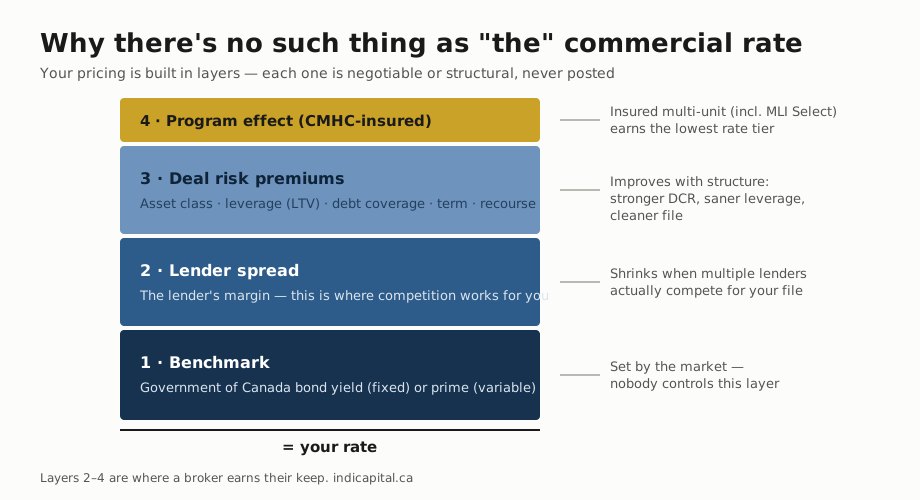
What moves your rate
- The benchmark — commercial rates are built off underlying Government of Canada bond yields and lender cost of funds, which move with the market.
- Insured vs. conventional — a CMHC-insured loan is lower-risk to the lender and usually prices lower than conventional. → CMHC vs. conventional financing
- Property type — stabilized multi-unit residential typically prices better than special-purpose or higher-risk assets.
- DSCR and LTV — stronger coverage and lower leverage earn better pricing. → How DSCR works
- Term and amortization — the structure you choose affects the rate.
- Your covenant — experience and financial strength matter.
How to actually get the best rate
- Strengthen the deal first — better DSCR and a cleaner package earn better pricing than negotiating ever will.
- Match the property to the right program — the CMHC-vs-conventional call often moves the rate more than shopping lenders does.
- Put lenders in competition — the same deal sent to the right handful of lenders comes back at different numbers. This is where a commercial broker earns their fee.
The honest bottom line
Chasing a headline rate is the wrong goal; the lowest all-in cost of the right structure is the right one. A slightly higher rate on a CMHC loan with more leverage and a longer amortization can beat a "lower" conventional rate once you count the down payment and term. We model that whole picture with you.
- Model your deal's economics: feasibility calculator
- Get live, deal-specific pricing: (902) 298-0218
- Related: The complete guide to commercial mortgages in Nova Scotia
Sources
- Bank of Canada — Canadian bond yields — the benchmark commercial pricing moves with
- Canada Mortgage and Housing Corporation (CMHC) — insured multi-unit financing
Indi Mortgage Commercial Division — commercial mortgages across Halifax and Nova Scotia. General information only; rates and terms change constantly and are set by lenders. Not financial advice.